← Back to Calculator
Latest News & Tips
Posted on March 22, 2026
Learn all about best renewable energy options for home use: wind vs solar calculator comparison in our comprehensive guide at the Renewable Energy Calculator.
Read Full Article →
Posted on March 22, 2026
Learn all about solar panel cost in 2026: prices, incentives and roi calculator explained in our comprehensive guide at the Renewable Energy Calculator.
Read Full Article →
Posted on March 20, 2026
Learn all about renewable energy calculator: how to estimate your solar panel payback period in our comprehensive guide at the Renewable Energy Calculator.
Read Full Article →
Posted on March 18, 2026
Learn all about how much can solar panels save you? 2026 solar energy savings guide in our comprehensive guide at the Renewable Energy Calculator.
Read Full Article →
The Complete Guide to Solar Panels: Harnessing the Sun for Your Energy Needs
Posted on March 15, 2026
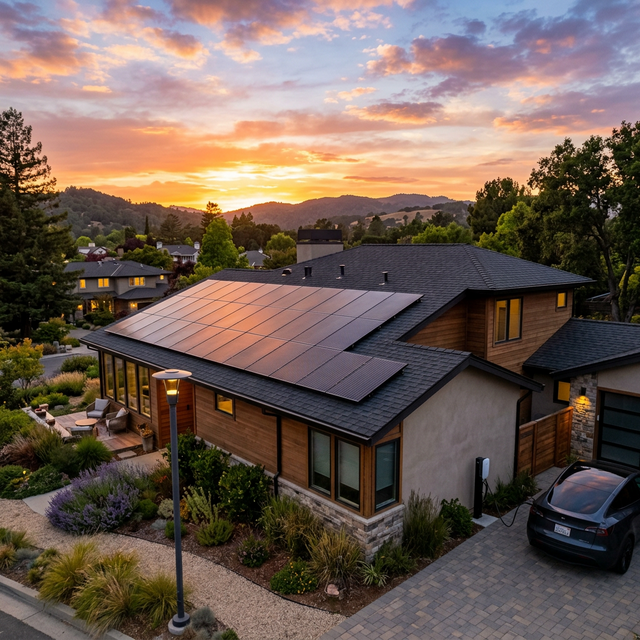
Introduction to Solar Energy
As the world pivots toward sustainable and renewable energy sources, solar power has emerged as the clear frontrunner. But how exactly do solar panels work, and why should you consider integrating them into your life? Whether you are a homeowner looking to slash your electricity bills or an outdoor enthusiast who needs reliable power off the grid, understanding the mechanics and benefits of solar panels is the first step toward energy independence.
The Science Behind Photovoltaic Cells
At their core, solar panels operate on a mesmerizing scientific principle called the photovoltaic effect. A standard solar panel is made up of numerous smaller units called photovoltaic (PV) cells. These cells are typically constructed using silicon, a highly effective semiconductor material. When sunlight, primarily composed of photons, strikes the surface of a PV cell, it transfers its energy to the electrons within the silicon lattice.
This process knocks the electrons loose from their atoms, creating a steady flow of electrical current. By capturing this current through metal conductive plates on the sides of the cell, we generate usable electricity. However, the electricity produced at this stage is Direct Current (DC). Since most household appliances and the standard electrical grid operate on Alternating Current (AC), the DC must be channeled through a crucial component known as an inverter. The inverter transforms the DC electricity into AC, making it instantly available to power everything from your refrigerator to your smartphone.
Scaling Solar to Fit Your Lifestyle
One of the greatest advantages of solar technology is its immense scalability. The exact same photovoltaic technology that powers massive, multi-megawatt solar farms in the desert can be scaled down to fit inside your backpack.
1. Residential Roof Installations
For homeowners, rooftop solar panel arrays represent a powerful long-term investment. Modern rigid solar panels are sleek, highly durable (often built to withstand severe weather, including hail), and come with warranties extending 25 years or more. Integrating these panels with a home battery backup system allows users to store excess daylight generation for use during the night or during unexpected grid outages.
2. Portable Outdoor Solar
In recent years, the market has seen an explosion in the popularity of portable, foldable solar panels. These flexible options are designed specifically for mobility. Ranging typically from 100W to 400W in capacity, these panels can be set up in seconds next to a campsite, on the roof of an RV, or simply unrolled in a sunny field. Often coated in rugged ETFE laminations, they plug directly into portable power stations, effectively giving you an infinitely renewable, silent power source miles away from civilization.
Financial and Environmental Impact
Transitioning to solar power offers incredible dual benefits. Environmentally, solar power generates exactly zero greenhouse gas emissions during its operational life. Unlike fossil fuels, which require extraction, transportation, and combustion (each step creating pollution), sunlight simply arrives free of charge every single morning.
Financially, while the upfront cost of solar installations can be notable, the return on investment is proven. Many governments offer substantial tax rebates, incentives, or net-metering programs that allow users to actually sell their excess generated electricity back to the main grid. Ultimately, solar panels do more than just generate electricity—they generate absolute peace of mind.
Rechargeable Batteries: From Pocket-Sized Power Banks to Home Backup Solutions
Posted on March 12, 2026

The Foundation of Modern Freedom
Imagine a world where your devices die every few hours and you are tethered strictly to wall outlets. Fortunately, the relentless evolution of rechargeable battery technology has liberated us from the grid. Today, rechargeable batteries are not merely accessories; they represent the absolute foundation of modern mobility, disaster preparedness, and off-grid adventuring. Understanding the different scales and capacities of these batteries is vital to choosing the right tool for your specific lifestyle needs.
Understanding Lithium-Ion Chemistry
Virtually all modern high-performance rechargeable batteries rely on lithium-based chemistry. The two most common types you will encounter in consumer electronics and power stations are Lithium-ion (Li-ion) and Lithium Iron Phosphate (LiFePO4).
Traditional Lithium-ion batteries (similar to what sits inside your cell phone) are incredibly energy-dense, meaning they can pack a massive amount of power into a very small, lightweight form factor. More recently, the industry has seen a massive shift toward LiFePO4 chemistry for larger applications. While slightly heavier, LiFePO4 batteries offer a staggering leap in lifespan, typically handling 3,000 to 5,000 full charge-discharge cycles before their capacity begins to noticeably degrade. They are also inherently safer and less prone to thermal runaway.
Scaling Battery Power for Every Use Case
1. Small Power Banks (10,000mAh - 30,000mAh)
At the smallest end of the spectrum, everyday-carry power banks are designed to slip into a purse or backpack. These lifesavers typically output power via standard USB-A or USB-C ports. A high-quality 20,000mAh power bank holds enough juice to recharge an average smartphone 4 to 5 times over. They are the perfect, indispensable companion for long flights, theme park visits, or intense days of business travel.
2. Mid-Size Portable Power Stations (200Wh - 1,000Wh)
This is the sweet spot for camping enthusiasts and digital nomads. Mid-sized power stations, such as the highly popular Jackery Explorer line, integrate complex battery management systems (BMS) alongside built-in AC pure-sine wave inverters. This design means you are no longer limited to USB devices; you can plug in standard household two or three-prong plugs.
A 500Wh unit is perfect for keeping a CPAP machine running smoothly overnight in a tent, charging drone batteries repeatedly in the field, or running a mini-fridge during a tailgate. Despite their impressive output, units in this category typically weigh under 15 pounds and feature easy-grip carrying handles.
3. High-Capacity Home Backups (1,500Wh - 3,000Wh+)
When severe storms hit and local power grids fail, small power banks simply won't cut it. For serious off-grid living, RV full-timers, or resilient home backup, high-capacity ecosystems take over. These massive battery reserves are capable of absorbing and delivering tremendous surges of power.
A 2,000Wh unit paired with a 2,200W output inverter can easily and safely run high-draw appliances including microwaves, full-sized residential refrigerators, power tools, and portable air conditioners for hours. The true genius of these large systems is their ability to chain together. Many modern setups allow you to daisy-chain expansion batteries to a core unit, artificially inflating your total capacity to 6,000Wh or more. When paired fully with fold-out solar panels, these systems create a self-sustaining microgrid that requires no toxic liquid fuel, requires no maintenance, and operates in total silence.
Why Renewable Energy Matters for Everyone on Earth
Posted on March 10, 2026
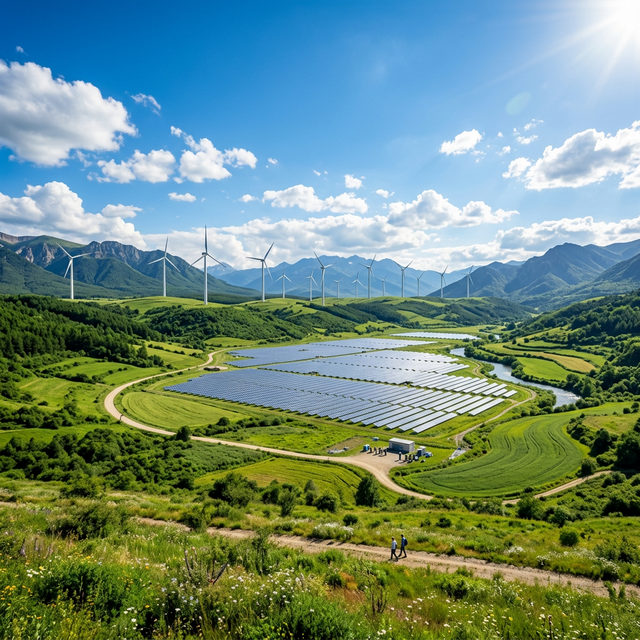
The Inevitable Shift
For more than a century, modern civilization has heavily relied on the combustion of fossil fuels—coal, oil, and natural gas—to power its explosive technological growth. While these dense energy sources have undeniably shaped the modern world, the massive hidden costs to both our planetary ecosystem and global human health have rapidly become apparent. Renewable energy is no longer just a trend or a hollow political talking point; it is a critical necessity for the sustained survival and prosperity of humanity.
Defining the "Renewable" Difference
Renewable energy represents power generated from virtually infinite natural resources that constantly and effortlessly self-replenish. The brightest examples include radiant solar energy from the sun, the kinetic energy of global wind patterns, and the endless flow of hydroelectric currents. In stark contrast to fossil fuels, which require incredibly destructive extraction processes and exist in finite, rapidly depleting reserves, renewable sources are effectively limitless. The sun will rise tomorrow, and the wind will blow, providing an energy source that requires no drilling.
Tackling the Climate Crisis Head-On
The single most urgent reason renewable energy matters is its direct role in mitigating catastrophic global climate change. When a power grid relies on coal or gas, it continually dumps colossal amounts of Carbon Dioxide (CO2) and other highly insulating greenhouse gases directly into our atmosphere. These gases aggressively trap solar heat, driving up global temperatures, melting polar ice, raising sea levels, and drastically fueling the frequency of extreme weather events like super-hurricanes and prolonged droughts.
Transitioning immediately to an infrastructure built upon wind and solar directly halts these emissions. A massive wind turbine or a sprawling solar farm generates thousands of gigawatts over its lifetime while releasing exactly zero emissions into the air you breathe. By pivoting away from dirty fuels, we don't just protect ice caps; we protect local communities from terrible respiratory diseases caused by localized smog, soot, and toxic airborne particulate matter.
The Democratization of Power
Perhaps one of the most exciting aspects of the renewable revolution is absolute democratization. Historically, power production was strictly centralized, tightly controlled by massive utility corporations. You bought what they generated at the prices they dictated. Solar technology, however, completely flips this dynamic on its head.
Today, a homeowner can install solar panels on their roof, immediately capturing the sun's energy for their own personal use. When paired with high-capacity rechargeable battery systems, families essentially become their own micro-utility providers. This decentralized approach creates an incredibly resilient grid. If a harsh winter storm takes down regional power lines, a home equipped with its own renewable array and battery reserve simply keeps the lights on, keeping the family warm and safe completely independent of the failing commercial grid.
Every single day, technology improves, driving the cost of solar panels and batteries down while driving their efficiency metrics up. The future of global energy does not rely on massive oil tankers or precarious gas pipelines; it relies on clean, intelligent, and infinite systems that sit quietly on our rooftops and silently in our valleys.